
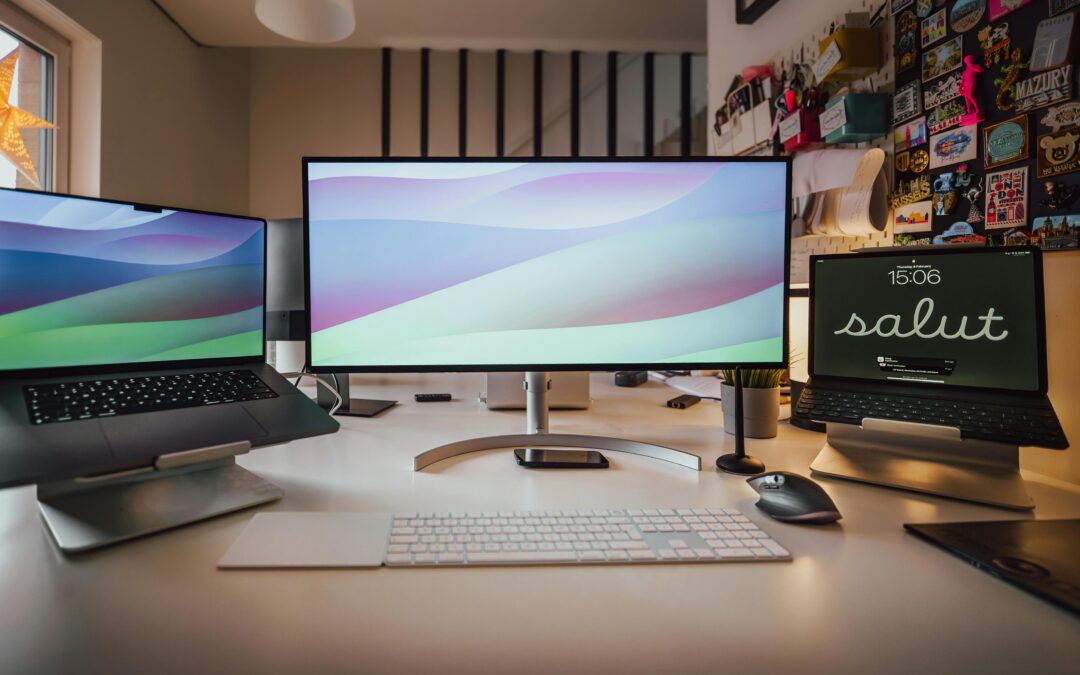

The morning commute in 2026 is often a matter of footsteps, not freeways. For a growing segment of the global workforce, the journey to the office is a short walk down a hallway, powered not by gasoline but by gigabits.
While the initial shift to remote work was a pandemic-era necessity, its enduring legacy has been supercharged by a technological catalyst: the ubiquitous, mature rollout of 5G networks. We are now living in the latency-free era, where the promise of working from anywhere has crystallized into a tangible, high-definition reality. This transformation is doing more than altering our daily routines; it is fundamentally recalibrating the value proposition of the places we call home, creating new winners and losers in the real estate market and redefining the very concept of “location, location, location.”
The End of Compromise: 5G as the Great Workplace Equalizer
For years, remote work was haunted by the specter of compromise. Video calls stuttered, large file transfers crawled, and real-time collaboration on complex designs was a lesson in frustration. The advent of robust, standalone 5G networks has vaporized these bottlenecks. With latency plummeting to near-instantaneous levels and download speeds consistently exceeding 500 Mbps—even in suburban and exurban areas—the physical office’s technical advantages have largely evaporated.
Consider the architectural firm, once bound to a central studio filled with powerful, hardwired workstations. Today, its designers leverage 5G hotspots to manipulate massive 3D building information modeling (BIM) files from a lakeside cabin. Surgeons consult on procedures via augmented reality overlays streamed in real-time to a colleague’s home office. Financial analysts run complex algorithmic models from a co-working space in a revitalized small town, with no discernible lag compared to the Wall Street data center. This isn’t just convenience; it’s a paradigm shift in capital allocation for businesses, reducing the need for expensive centralised infrastructure and unlocking a global talent pool unbounded by geography.
Practical Implications for the 2026 Remote Professional
The practical shift is profound. The “home office” is no longer a spare room with a residential-grade Wi-Fi router. It is a professional-grade node on a global network. High-intent commercial services have emerged to cater to this new reality:
- Enterprise-Grade 5G Mesh Systems: Companies like Cisco and Aruba now offer subscription-based home mesh systems, managed by corporate IT, that prioritize work traffic and ensure bank-level security over 5G backhauls.
- Boutique Co-Working Hubs: Beyond WeWork, we see the rise of niche, premium co-working spaces in secondary cities—think “The Architect’s Lodge” in Asheville or “The Quant Den” in Boulder—catering to specific high-earning remote professions with tailored 5G infrastructure.
- Virtual Presence Consultants: A new breed of service professional helps executives optimize their home studios for flawless, boardroom-quality holographic and volumetric video calls, a necessity for leadership in distributed companies.
The Real Estate Reckoning: Location Value in a Latency-Free World
As the technical imperative to cluster in major urban hubs diminishes, the real estate market is undergoing a historic correction. The classic drivers of home value are being rewritten, with 5G performance now sitting alongside school districts and square footage as a critical metric.
The New “Must-Have” Amenities
Real estate listings in 2026 prominently feature connectivity metrics. “Fiber-ready” has been joined by “5G Ultra Capacity Guaranteed” and “Low-Latency Zone.” Properties that offer a combination of pastoral tranquility and urban-grade bandwidth command a significant premium. This has led to a boom in what analysts call “Zoom Towns 2.0″—communities that were once purely vacation-oriented but have invested heavily in next-generation digital infrastructure to attract permanent, high-income remote residents.
Conversely, urban cores are adapting. The value proposition of a downtown condo is shifting from proximity to the office to proximity to experience—culture, dining, and social hubs. The most successful urban developments now integrate seamless 5G coverage throughout common areas, rooftops, and even parks, creating a continuous work environment.
High-Value Services Shaping the Market
This transformation has spawned an entire ecosystem of high-intent service providers:
- Home Connectivity Audit Services: Prior to purchase, high-net-worth individuals engage firms to perform detailed 5G signal mapping and latency tests throughout a property, a due diligence step as critical as a home inspection.
- Bespoke Home Office Design-Build Firms: Architects and contractors specializing in soundproofed, ergonomic, and technologically integrated home studios are in unprecedented demand. They handle everything from dedicated 5G antenna installation to lighting optimized for 8K video.
- Destination Relocation Consultants: These advisors go beyond traditional realtors, helping remote executives and their families identify communities that offer the optimal blend of lifestyle, tax advantages, and, above all, bulletproof multi-carrier 5G coverage.
Industry-Specific Transformations and New Frontiers
The impact of 5G-powered remote work is not uniform; it is catalyzing revolution in specific sectors.
Healthcare: The Telehealth Quantum Leap
Telehealth has moved far beyond simple consultations. With reliable, high-bandwidth 5G, in-home medical device integration is now standard. Physical therapists guide patients through exercises with real-time form correction via AR. Chronic condition monitoring through wearable suites transmits continuous data streams to clinicians, enabling preventative care that keeps patients out of hospitals. This has increased demand for homes with dedicated “healthcare nooks” that can accommodate this technology.
Education & Creative Industries
Educators are crafting immersive virtual field trips and collaborative global classrooms. Musicians in different countries rehearse in real-time without latency. The barrier between content creator and consumer has blurred, enabling new forms of interactive entertainment and instruction produced from home studios that rival professional facilities.
Navigating the Challenges: Security, Equity, and the Human Element
This hyper-connected future is not without its perils. The distributed corporate network presents a massive attack surface, making enterprise-grade zero-trust security solutions non-negotiable for both employers and employees working with sensitive data. Furthermore, the “digital divide” risks evolving into a “5G divide,” where communities without access to advanced infrastructure see their economic prospects dim. Policymakers are grappling with how to treat 5G not as a luxury, but as essential 21st-century infrastructure, akin to electricity or paved roads.
Moreover, companies are investing in premium virtual team-building services and executive leadership coaching for distributed teams to combat isolation and maintain corporate culture—a significant line item in the modern HR budget.
The 2026 Outlook: A Permanent Reconfiguration
As we stand in 2026, the transformation is not a speculative future but a documented present. The fusion of mature 5G technology and evolved remote work practices has triggered a permanent reconfiguration of work and life. Home values are now intrinsically linked to digital potential. Commercial real estate is being repurposed for experience and collaboration, not daily occupancy. A new geography of talent and opportunity has emerged, one defined by bandwidth maps as much as by highways.
The most successful individuals and organizations have moved beyond seeing 5G as merely a faster internet connection. They recognize it as the foundational utility of the new economy—the invisible grid that untethers high-value work from specific coordinates, empowers profound lifestyle choices, and continues to rewrite the rules of where and how we live. The future of work arrived not with a bang, but with a silent, ubiquitous, and incredibly fast signal.
Photo Credits
Photo by Jakub Zerdzicki on Pexels