
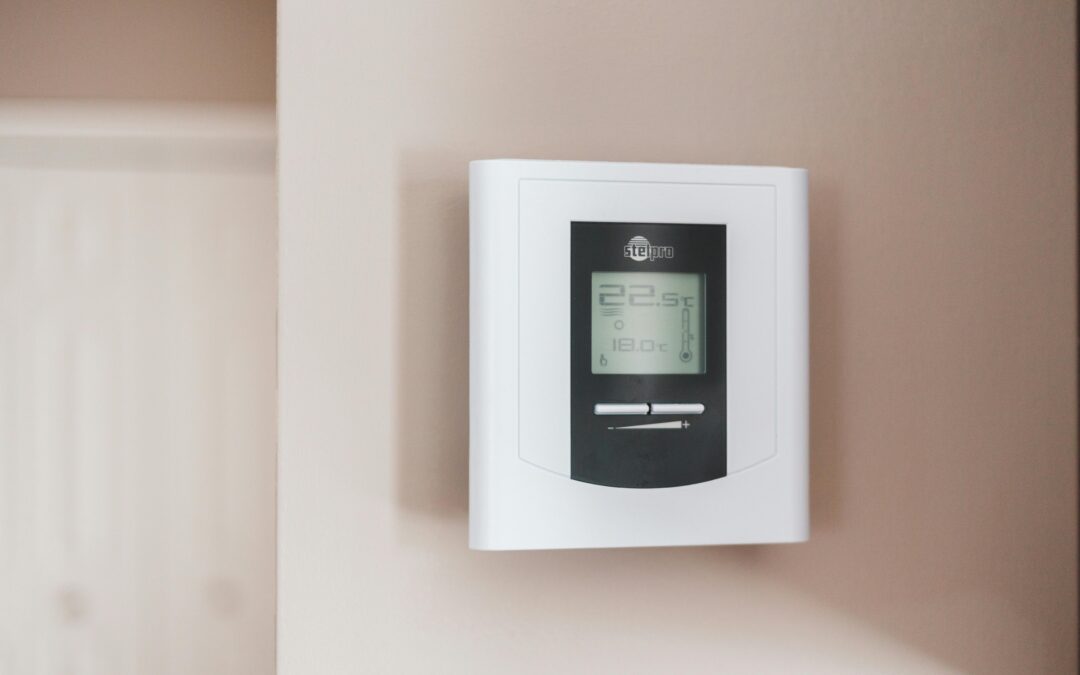
In the quiet hum of a modern home, a small device on the wall is doing more than regulating temperature—it’s executing a sophisticated financial strategy. The smart thermostat, once a novelty for the tech-enthusiast, has evolved into a cornerstone of household capital allocation, merging artificial intelligence with tangible fiscal returns. As we move through 2026, the calculus of purchasing one has been fundamentally altered not just by advancements in machine learning and interoperability, but by a powerful, often overlooked lever: federal and state tax incentives.
This isn’t merely about comfort or convenience; it’s a deliberate investment in energy arbitrage and tax efficiency. For the financially astute homeowner, understanding this nexus of technology and policy is key to unlocking significant savings and contributing to a broader sustainability mandate. We dive into the numbers, the legislation, and the strategic considerations that turn a simple climate control upgrade into a savvy financial move.
The 2026 Landscape: Beyond the Basic Thermostat
The modern smart thermostat is a nexus of home intelligence. Brands like ecobee, Google Nest, and Emerson Sensi have moved far beyond programmable schedules. Today’s units leverage geofencing, occupancy sensors, and deep learning algorithms to adapt to your life patterns, often integrating with whole-home energy monitoring systems. They are the gatekeepers for the largest energy expense in most homes: heating and cooling, which can account for over 50% of a utility bill. The promise is direct: reduce waste, lower consumption, save money. But the upfront cost, ranging from $150 to $400 for premium models, plus potential installation fees, can give pause. This is where the tax credit landscape becomes the critical factor in the return-on-investment equation.
Decoding the Tax Credit: The Inflation Reduction Act’s Long Shadow
The landmark Inflation Reduction Act (IRA) of 2022 continues to be the dominant force in residential energy incentives through 2026 and beyond. Its provisions have created a stable, multi-year framework for homeowners. For smart thermostats, the benefit falls under the Energy Efficient Home Improvement Credit (25C).
How It Works in 2026:
- Credit Value: The credit is worth 30% of the total project cost, including the price of the qualifying thermostat and its professional installation.
- Annual Limit: There is a yearly maximum of $1,200 for this specific credit category (which also covers items like windows, doors, and insulation).
- Qualification Criteria: Not every smart thermostat qualifies. The unit must be an “Energy Star” certified smart thermostat. Furthermore, the credit stipulates that the thermostat must be installed as part of a “qualified energy efficiency improvement.” In practice, this often means it should be part of an upgrade to a high-efficiency HVAC system (like a heat pump or central air conditioner) or be installed by a certified professional who can verify its integration into an efficiency audit. A standalone DIY replacement of an old thermostat with a smart one may not qualify unless it meets these conditions. Always retain the Energy Star certification and manufacturer’s certification statement for your records.
Strategic Installation: Partnering with HVAC Professionals
This is where the “commercial bridge” becomes vital. To ensure eligibility and maximize the credit, partnering with a certified HVAC contractor is a prudent strategy. These professionals don’t just install; they provide a home energy audit that can identify the most impactful upgrades. When you engage a local HVAC service for a system tune-up and smart thermostat integration, you’re not just buying a service—you’re creating a documented, qualifying project. This documentation is essential for claiming the credit on your IRS Form 5695.
The Financial Model: Calculating Your True Return on Investment
Let’s move from policy to portfolio with a concrete 2026 example. Consider a homeowner in Chicago upgrading their aging system.
- Project Cost: A high-efficiency Energy Star certified heat pump installation: $7,500. Included in this package is a qualifying ecobee Smart Thermostat Premium with professional installation, valued at $400.
- Tax Credit: 30% of $7,900 total project cost = $2,370. However, the credit is capped at $2,000 per year for heat pumps specifically (a separate limit within the IRA). The thermostat portion falls under the $1,200 general limit, which is easily covered here.
- Net System Cost Post-Credit: $7,900 – $2,000 = $5,900.
- Annual Energy Savings: The new system and smart thermostat combined could reduce heating/cooling costs by an estimated 25%. On an annual bill of $2,400, that’s $600 in savings.
- Simple Payback Period: $5,900 net cost / $600 annual savings = ~9.8 years on the HVAC system. The thermostat’s role accelerates this payoff.
- Utility Rebates: Many local energy providers offer additional instant rebates for smart thermostats, often $50-$100. This is an immediate point-of-sale price reduction, separate from the tax credit.
The smart thermostat, in this context, isn’t a standalone purchase. It’s a value-adding component of a larger, incentivized capital improvement that boosts the entire project’s ROI.
State and Local Incentives: The Multi-Layered Incentive Stack
The federal credit is the foundation, but the most lucrative strategies involve “stacking” incentives. In 2026, many states have robust programs running concurrently.
- New York’s NYSERDA: Offers rebates for connected thermostats when paired with heat pumps, sometimes administered through participating HVAC contractors in NYC and statewide.
- Massachusetts’ Mass Save: Continues to offer significant rebates and zero-interest HEAT loans for comprehensive upgrades that include smart controls.
The key is to consult the Database of State Incentives for Renewables & Efficiency (DSIRE), the authoritative source for updated local policies. Engaging a local energy efficiency consultant can also help navigate this complex, lucrative landscape.
Beyond the Credit: The Intangible Financial Benefits
The direct savings and credits are only part of the story. Sophisticated financial planning considers ancillary benefits.
- Increased Home Resale Value: A 2025 study by the National Association of Realtors indicated that smart home energy management features are a growing preference among buyers, potentially boosting perceived value.
- Demand-Response Earnings: Programs from companies like OhmConnect or utility-specific initiatives pay homeowners for allowing slight, temporary adjustments during peak demand. The smart thermostat automates this, turning grid stability into a minor revenue stream.
- Predictive Maintenance: High-end models can monitor HVAC system performance, alerting you to inefficiencies or potential failures before they become costly emergencies, acting as a form of mechanical systems insurance.
Actionable Steps for the 2026 Homeowner
To capitalize on this financial opportunity, follow this strategic roadmap:
- Conduct a Home Energy Audit: Hire a certified residential energy auditor. This $300-$500 investment identifies the most cost-effective improvements and provides the blueprint for qualifying projects.
- Research and Bundle: Don’t just shop for a thermostat. Look at your HVAC system’s age and efficiency. Bundling a qualifying thermostat with a larger upgrade like a heat pump installation is where the major tax credit value lies.
- Verify Qualifications: Before purchase, confirm the specific thermostat model is Energy Star certified and that your intended installation method meets IRS guidelines. When in doubt, use a certified professional.
- Document Everything: Keep all receipts, manufacturer certification statements, and contractor reports that detail the work performed and its energy-saving purpose.
- Consult a Tax Professional: Especially for large projects, a brief consultation with a CPA familiar with energy credits can ensure correct filing and maximize your benefit.
The Future Outlook: Where Policy and Technology Converge
Looking past 2026, the trajectory is clear. Tax credits for efficiency are likely to remain a policy tool, though their specifics may evolve. Technology, meanwhile, is pushing toward greater grid integration and predictive analytics. The next-generation smart thermostat will act less as a reactive device and more as a home’s chief energy officer, dynamically managing electricity consumption against real-time utility rates (time-of-use pricing), solar battery storage, and electric vehicle charging. The financial case will then expand from simple savings to active energy portfolio management.
The narrative of the smart thermostat has been rewritten. It is no longer a discretionary gadget but a strategic financial node in the modern home. By leveraging the substantial tax credits available in 2026, stacking them with local incentives, and integrating the device into a broader home efficiency strategy, homeowners can achieve a compelling triple bottom line: immediate tax reduction, long-term utility savings, and meaningful contribution to energy independence. The initial capital outlay transforms into an investment with a documented, government-incentivized return. In the evolving economy of the American home, intelligence isn’t just about connectivity—it’s about capital.
Photo Credits
Photo by Erik Mclean on Pexels