
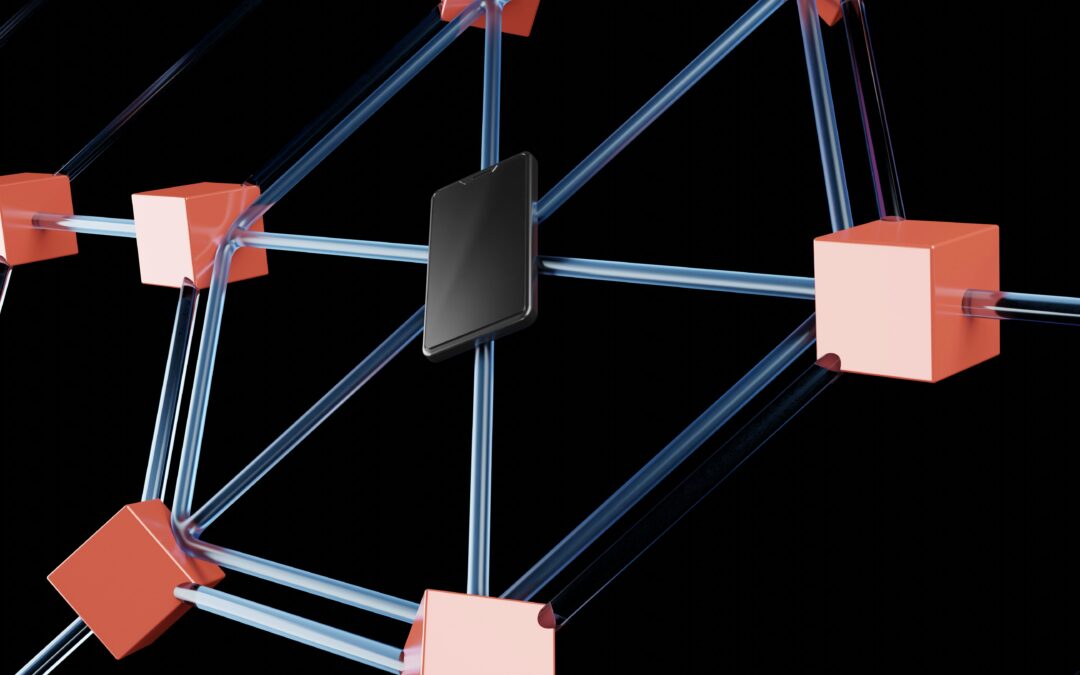

For most of the past decade, the word “blockchain” conjured images of volatile digital currencies and speculative fervor. But as the hype of the initial coin offering (ICO) era faded into a more sober, regulated reality, a profound and quiet transformation began.
The underlying architecture—a decentralized, immutable, and transparent digital ledger—has been steadily migrating from the fringes of finance to the very core of our most significant assets and daily transactions.
In 2026, blockchain is no longer just about what you own digitally; it’s fundamentally reshaping how we own, manage, and leverage our physical world, particularly our homes and our personal capital. This is the story of the unseen ledger, moving beyond cryptocurrency to rebuild the foundations of trust in property and finance.
The Foundation: Demystifying the Digital Ledger
Before we explore its revolutionary applications, let’s briefly deconstruct the core value proposition. Imagine a shared database, not housed on a single company’s server, but duplicated across thousands of computers globally. Every transaction or entry—a property deed transfer, a loan payment, an appliance’s warranty—is cryptographically sealed into a “block” and chained to the previous one. This creates an immutable record: no single entity can alter past entries without consensus from the entire network. This trifecta of decentralization, transparency, and security is solving age-old problems of fraud, inefficiency, and opacity that have long plagued real estate and financial services.
Reinventing Real Estate: From Closing Woes to Seamless Sovereignty
The process of buying a home has historically been a labyrinth of paperwork, intermediaries, and anxiety. In 2026, blockchain is streamlining this into a verifiable, digital workflow.
Tokenization: Fractional Ownership and Democratized Access
One of the most significant shifts is the rise of real estate asset tokenization. Here, a property’s value is divided into digital tokens on a blockchain. This isn’t merely a theoretical concept; platforms are now enabling fractional ownership of luxury vacation homes or commercial buildings. For the average investor, this means the ability to allocate capital toward prime real estate with a much lower entry point, diversifying a portfolio with tangible assets previously out of reach. For sellers, it unlocks liquidity without a full sale. Think of it as a stock market for property equity, powered by smart contracts that automate dividend distributions from rental income.
The Smart Contract Closing: Eliminating the “Black Box”
The closing process, with its title searches, notaries, and escrow agents, is being condensed from weeks to days. Smart contracts—self-executing code on the blockchain—are the engine. Once pre-programmed conditions are met (funds verified, inspections passed), the contract automatically executes: the deed is digitally transferred, and funds are released instantly. This removes layers of intermediaries, reducing costs and the risk of human error or fraud. Title insurance, while still relevant, is evolving to underwrite the integrity of the blockchain protocol and smart contract code itself.
Immutable Property Histories and Provenance
Every repair, permit, lien, and ownership change for a home can now be recorded on a blockchain, creating a lifelong, unforgeable log. For prospective buyers, this provides unparalleled transparency. No more wondering about that unpermitted renovation. For municipalities, it simplifies tax assessment and code enforcement. This extends to high-value appliance warranties and service histories, where a furnace’s entire maintenance record is verifiably attached to the home’s digital twin, increasing its value and simplifying future home warranty claims.
The Personal Finance Revolution: Programmable Money and Self-Sovereign Identity
Beyond brick and mortar, blockchain is redefining the relationship between individuals and their financial lives, moving us toward a system of programmable, composable capital.
Decentralized Finance (DeFi) Grows Up
The wild west of DeFi has matured into a robust, albeit regulated, alternative financial system. In 2026, consumers are using blockchain-based protocols for activities that bypass traditional banks. This includes earning competitive yield on stablecoin savings, accessing collateralized lending platforms using tokenized assets as collateral, and executing complex, multi-step financial strategies through “DeFi aggregators.” The key evolution is the integration of real-world identity and compliance (known as “Know-Your-Customer” or KYC) directly into these protocols, making them safer and more accessible to mainstream users seeking alternatives to traditional premium rewards cards and savings accounts.
Self-Sovereign Identity (SSI) and Credit
Your identity and credit history are no longer solely the property of centralized bureaus. With SSI on blockchain, you control a verifiable digital identity wallet. You can selectively share proof of your income, payment history, or credentials without revealing underlying sensitive data. This allows for more nuanced and fair personalized credit scoring models. Imagine securely proving your consistent on-time rent payments to a lender directly from your landlord’s verified blockchain records, building credit without traditional debt. This dismantles barriers for the “credit invisible” and creates a more holistic financial portrait.
Automated and Transparent Wealth Management
The concept of the “robo-advisor” is evolving into on-chain, automated portfolio management. Through decentralized autonomous organizations (DAOs) and indexed investment pools, individuals can participate in sophisticated, algorithmically rebalanced portfolios with full transparency into the underlying assets and fee structures. Every fee, every trade, and every performance metric is recorded on-chain, eliminating the opacity that has sometimes plagued traditional wealth management services.
Practical Integration: What This Means for You in 2026
This shift isn’t abstract. The integration is happening now through user-friendly interfaces. Consider a homeowner in 2026:
- They might use a blockchain-based home equity platform to tokenize a portion of their home’s value, using the funds for a renovation, with the smart contract automatically paying token holders from the resulting increase in rental income.
- Their mortgage, if from a forward-thinking lender, could exist as a tokenized debt asset, allowing them to refinance or sell participation in it on a secondary market for better rates.
- All household warranties and service contracts for their smart appliances are digitally stored and self-execute service calls when IoT sensors detect a fault.
- Their personal financial dashboard seamlessly integrates traditional bank accounts with DeFi yield positions and tokenized real estate holdings, providing a unified view of their net worth.
Navigating the New Landscape: Challenges and Considerations
The transition is not without friction. Regulatory frameworks are still catching up, creating a complex patchwork of compliance. The “oracle problem”—how smart contracts securely access real-world data—remains a critical engineering challenge. Furthermore, while security is robust at the protocol level, user error (like losing private keys) and sophisticated phishing attacks are persistent risks. Engaging with these technologies requires due diligence, often best initiated by consulting with a fintech-savvy financial advisor or legal professional who understands digital asset law.
Conclusion: The Infrastructure of Trust
As we move deeper into 2026, the narrative has decisively shifted. Blockchain has evolved from a disruptive speculation into a foundational technology—an infrastructure of trust. It is quietly solving the perennial problems of verification, intermediation, and access in the realms that matter most: our homes and our financial sovereignty. The promise is a future where asset ownership is more liquid and democratic, financial systems are more transparent and inclusive, and our digital and physical economic lives are seamlessly, securely integrated. The ledger is no longer unseen; it is becoming the bedrock upon which a new era of personal capital and property rights is being built.
Photo Credits
Photo by GuerrillaBuzz on Unsplash